After the spiral stops, it seems to slowly rotate or expand in the opposite direction, while not moving at all.
Try this
- Tick Start the spiral and keep your eyes on the red dot.
- When it stops, keep looking. Then look at your hand or a wall: it may seem to move too.
Why it happens
Neurons tuned to one direction of motion get tired when they fire for a long time. When the motion stops, neurons tuned to the opposite direction briefly outweigh them, so a still scene seems to drift backward. Robert Addams described it in 1834 after watching the Falls of Foyers in Scotland; that is why it is also called the waterfall illusion. George Mather, Frans Verstraten and Stuart Anstis edited a book on the modern science of the effect.
Did you know?
The aftereffect can make a still object look like it is moving while not changing position, a clue that the brain processes motion and position separately.
References
- Mather G., Verstraten F., Anstis S. (eds.) (1998). The Motion Aftereffect: A Modern Perspective. MIT Press. doi:10.7551/mitpress/4779.001.0001
- Background on Wikipedia
The illusion on this page is drawn by code written for this site. Last checked 1 November 2026.
Frequently asked questions
Why does the spiral seem to turn backward?
Motion-sensing neurons adapt to one direction; when the motion stops, the opposite direction briefly wins.
Try these next
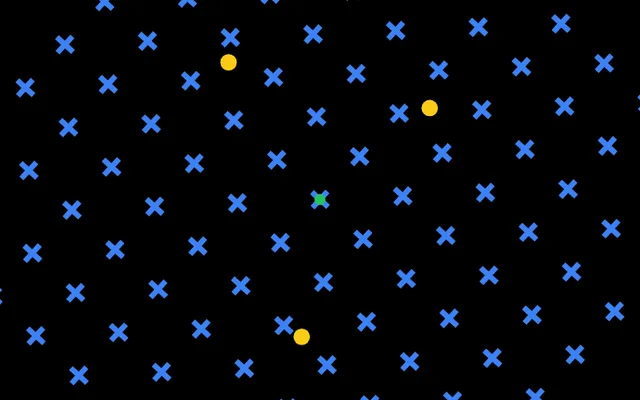 MotionMotion-induced blindness
Three bright yellow dots disappear while a blue pattern turns behind them.
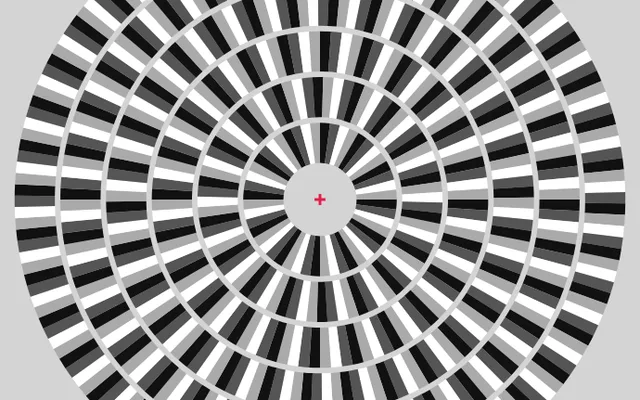 MotionPeripheral drift
A still pattern seems to rotate in the corner of your eye.
 MotionPinna-Brelstaff rings
Two rings of squares seem to spin in opposite directions as the picture zooms in and out.